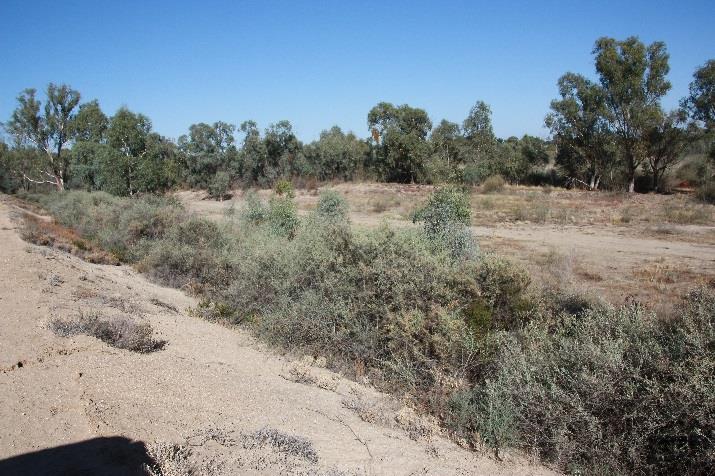
The survey in February 2016 found that there were river red gums and black boxes scattered throughout the site. The southern part of the site was dominated by extensive areas of healthy and unhealthy lignum with patches of common reed. The northern end of the site was ringed by dense common reeds, small monkey-flower and bushy starwort. As with the other environmental sites, the ground cover was predominately samphire, heliotrope, curled dock and blown grass.
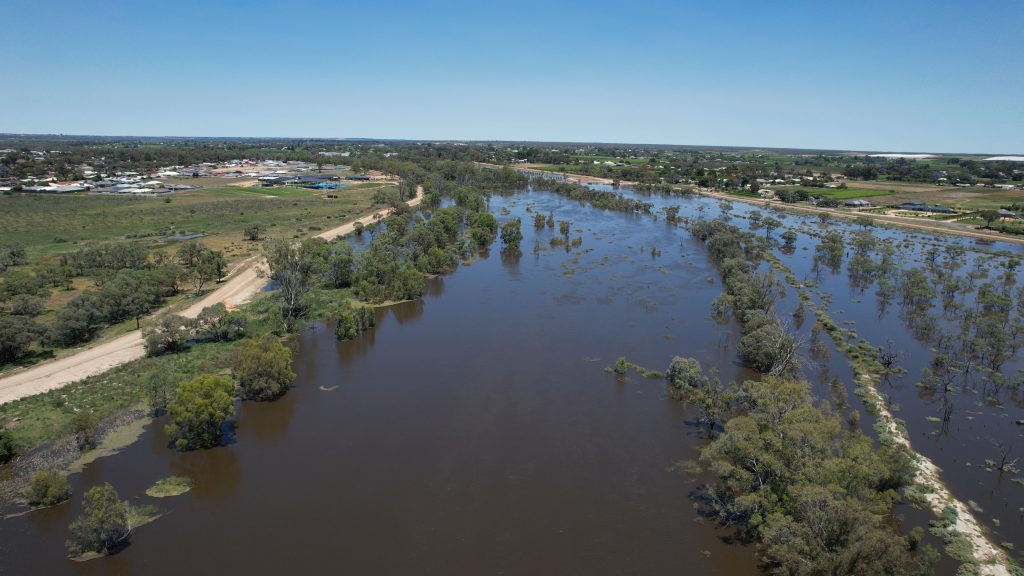
The site was inundated for many months during the 2022-2023 flood. During this time, surveys found 19 waterbird species, including the Australian Spotted Crake which is uncommon in the area, and 12 woodland bird species.
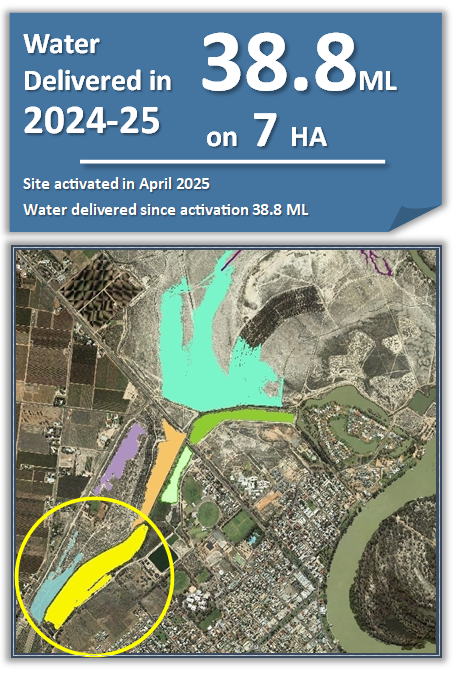
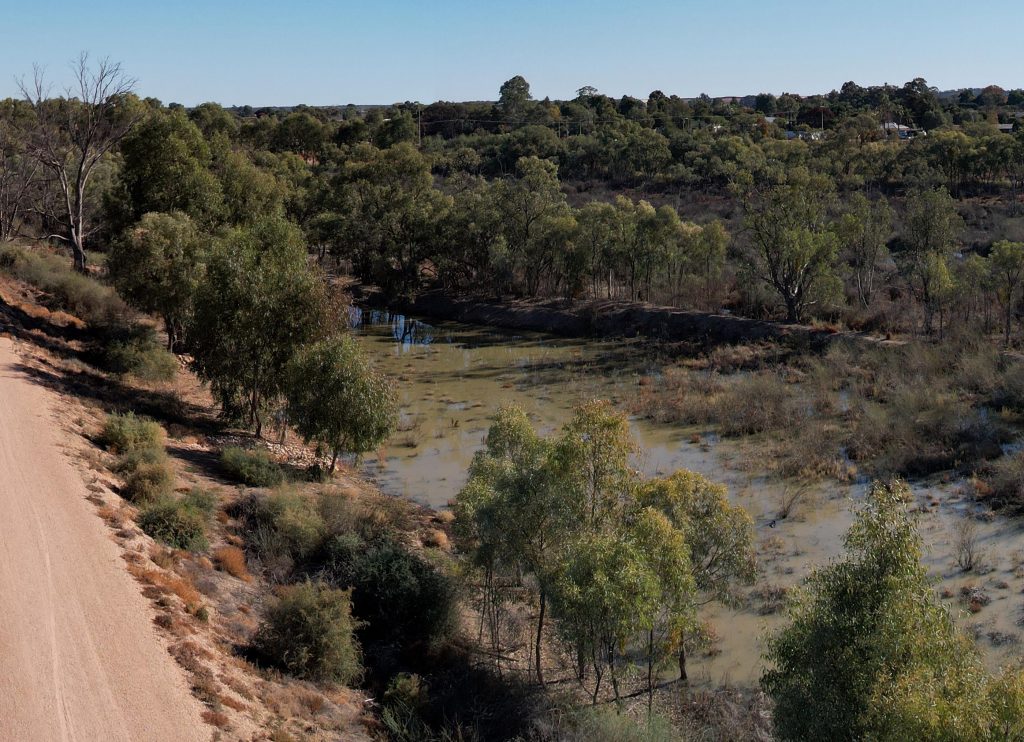
The first environmental water delivery occurred in April 2025. Initial surveys at the site found 5 waterbird species, 19 woodland bird species, and 1 frog species. It is hoped that by delivering environmental water to mimic a natural flood pattern over the next coming years, regeneration of vegetation will create a more suitable habitat for waterbirds and frogs.